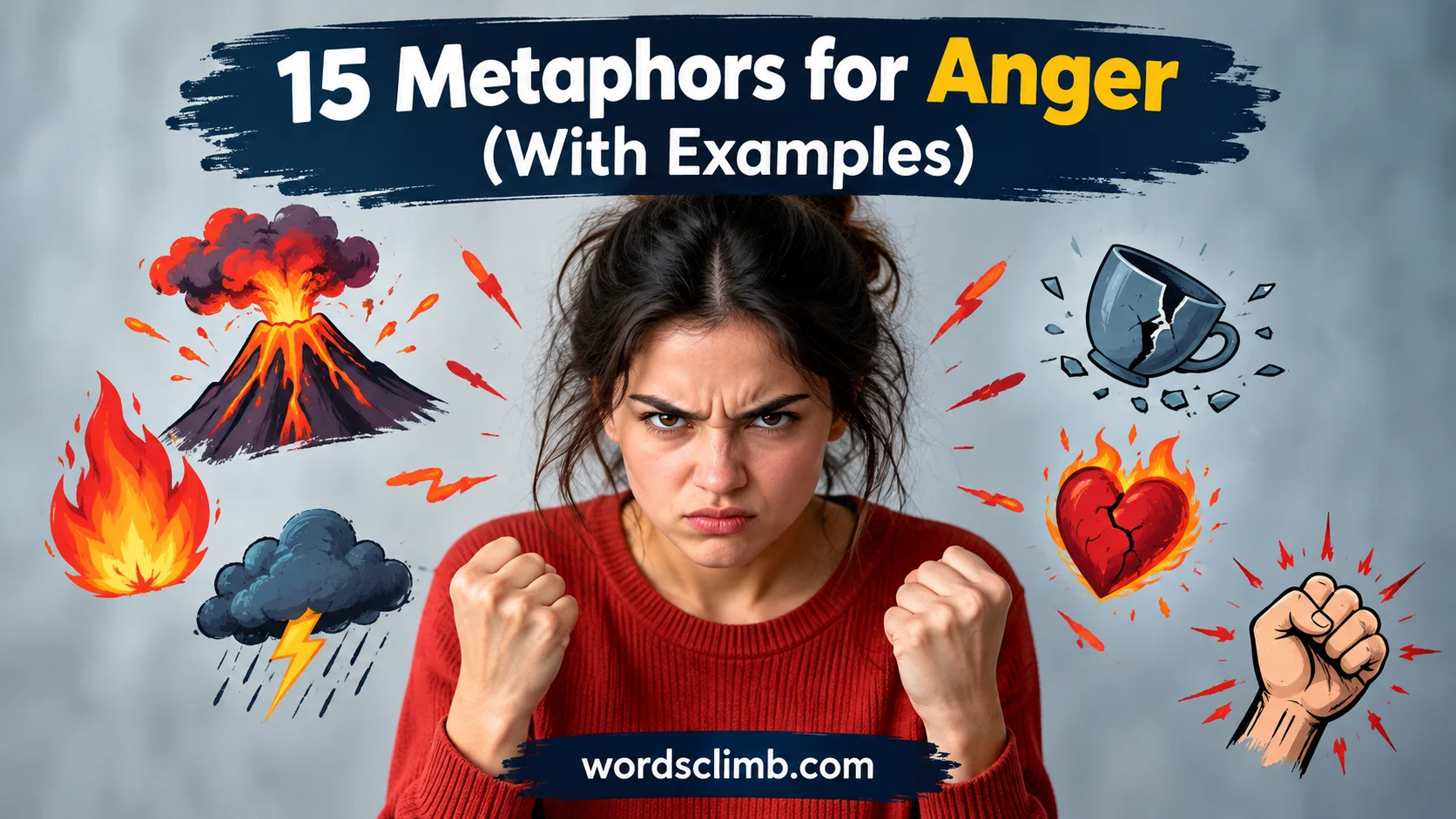
Metaphors for Anger (With Examples) help you express strong emotions through vivid images like fire, storms, volcanoes, and thunderclouds. Instead of simply saying someone feels angry, these metaphors make the emotion easier to imagine and understand. Whether you are writing a poem, story, speech, or school assignment, the right metaphor can make your words more powerful, natural, and memorable.
Anger can be a locked furnace, a storm inside the heart, or a match in dry grass, each showing a different level of emotional intensity. These creative expressions can reveal frustration, betrayal, injustice, hurt, and loss of control. By using anger metaphors in everyday conversation and creative writing, you can describe complicated feelings clearly, build stronger imagery, and help readers connect with the emotions behind your words.
1. Anger Is a Burning Fire
Meaning: Anger is compared to a fire that grows stronger and consumes everything in its path.
Detailed Explanation:
Fire is a powerful metaphor for anger because both can begin with a small spark and gradually become intense. A minor disagreement may initially cause irritation, but repeated frustration can make the emotion grow until it becomes difficult to control.
This metaphor is useful when describing intense anger, resentment, or emotional frustration. It can also show how anger affects relationships when people allow it to spread without addressing its cause.
Example Sentence:
- Her anger was a burning fire that grew stronger with every unfair accusation.
- A small misunderstanding became a fire of anger between the two friends.
- He felt a burning fire inside him when he discovered the truth.
3 Other Ways to Say It:
- Anger is a blazing flame.
- Rage is a wildfire.
- Frustration is a growing fire.
2. Anger Is a Brewing Storm
Meaning: Anger is compared to a storm that gradually develops before releasing its force.
Detailed Explanation:
Storms often begin with dark clouds, strong winds, and changes in the atmosphere. Similarly, anger may develop slowly through disappointment, stress, or unresolved conflict. A person might remain quiet while their frustration continues to grow beneath the surface.
This metaphor describes hidden anger that becomes stronger over time. It works particularly well in stories when a character appears calm but is approaching an emotional breaking point.
Example Sentence:
- A storm of anger was brewing inside Maya after weeks of unfair treatment.
- His silence concealed a storm that was ready to break.
- The argument became the final cloud before her anger erupted.
3 Other Ways to Say It:
- Anger is gathering storm clouds.
- Rage is a thunderstorm waiting to break.
- Frustration is a storm on the horizon.
3. Anger Is Boiling Water
Meaning: Anger is compared to water heating until it reaches its boiling point.
Detailed Explanation:
When water heats up, bubbles begin to form, and eventually the water boils. Anger can develop in a similar way as irritation builds through repeated problems. A person may tolerate several frustrating situations before finally losing patience.
The expression boiling with anger communicates an intense emotional state in which someone feels close to reacting. It is especially useful for describing growing frustration and the moment when patience runs out.
Example Sentence:
- He was boiling with anger after hearing the same excuse for the third time.
- Her frustration reached its boiling point during the meeting.
- I could feel my anger bubbling beneath my polite smile.
3 Other Ways to Say It:
- Anger is a boiling kettle.
- Rage is bubbling beneath the surface.
- Frustration is reaching its boiling point.
4. Anger Is a Volcano Ready to Erupt
Meaning: Anger is compared to a volcano that releases pressure through a sudden eruption.
Detailed Explanation:
A volcano can remain quiet for a long time while pressure builds beneath its surface. In the same way, a person may hide their anger until an upsetting event causes an emotional outburst.
This metaphor highlights the difference between suppressed anger and explosive reactions. It can describe someone who has endured repeated disappointments before finally expressing everything they have been holding inside.
Example Sentence:
- His anger was a volcano ready to erupt after months of criticism.
- One careless remark turned her quiet frustration into a volcanic explosion.
- The manager’s patience disappeared, and his anger erupted like a volcano.
3 Other Ways to Say It:
- Anger is a volcano under pressure.
- Rage is an explosive eruption.
- Frustration is molten lava beneath the surface.
5. Anger Is a Pressure Cooker
Meaning: Anger is compared to a pressure cooker that holds increasing pressure until it must be released.
Detailed Explanation:
A pressure cooker contains heat and pressure inside a closed space. Similarly, people sometimes keep their feelings hidden because they fear conflict, rejection, or misunderstanding. However, unexpressed frustration can accumulate until even a small problem triggers a strong reaction.
This metaphor emphasizes the importance of recognizing and expressing emotions constructively. It reminds readers that repeatedly ignoring anger may make it harder to manage later.
Example Sentence:
- Every unresolved argument added pressure to the pressure cooker of his anger.
- She felt like a pressure cooker after keeping her frustration to herself for weeks.
- The smallest disagreement released the pressure she had been carrying.
3 Other Ways to Say It:
- Anger is a pressure tank about to burst.
- Rage is steam trapped inside a sealed container.
- Frustration is pressure building behind a closed valve.
6. Anger Is a Raging Beast
Meaning: Anger is compared to a wild animal that becomes difficult to control.
Detailed Explanation:
A wild beast can act unpredictably when threatened or provoked. Anger may feel similarly powerful when emotions overwhelm a person’s ability to think calmly. Someone experiencing intense rage may struggle to choose their words carefully or consider the consequences of their actions.
This metaphor is often used in fiction, poetry, and dramatic writing to portray uncontrolled anger and powerful emotional reactions. It also suggests that anger needs to be managed rather than allowed to control behavior.
Example Sentence:
- His anger became a raging beast that frightened everyone in the room.
- She struggled to tame the beast of anger rising inside her.
- He learned to control the angry animal within him before speaking.
3 Other Ways to Say It:
- Anger is a wild tiger.
- Rage is an untamed lion.
- Frustration is a restless beast.
7. Anger Is a Flash of Lightning
Meaning: Anger is compared to lightning because it can appear suddenly and intensely.
Detailed Explanation:
Lightning strikes quickly and illuminates the sky in an instant. Similarly, anger can arise unexpectedly when someone hears an insulting comment, experiences an injustice, or faces an unpleasant surprise.
Unlike metaphors that describe slowly developing frustration, this comparison emphasizes sudden anger and immediate emotional intensity. It is useful when describing a character whose mood changes dramatically in a moment.
Example Sentence:
- A flash of anger crossed his face when he heard the accusation.
- Her anger struck like lightning after she discovered the broken promise.
- His eyes flashed with anger when the truth was revealed.
3 Other Ways to Say It:
- Anger is a lightning strike.
- Rage is a sudden thunderclap.
- Frustration is a spark in the darkness.
8. Anger Is a Poison
Meaning: Anger is compared to poison because it can gradually damage a person’s peace of mind and relationships.
Detailed Explanation:
Poison can harm the body when it enters and spreads through it. Similarly, long-lasting resentment and bitterness can affect emotional well-being and the way people treat others. When someone repeatedly revisits an old disagreement, their anger may continue to influence their thoughts long after the original event has passed.
This metaphor does not mean that every experience of anger is harmful. Rather, it highlights how unresolved resentment can become damaging when it dominates a person’s life.
Example Sentence:
- His anger became a poison that slowly damaged his friendship.
- She realized that bitterness was a poison eating away at her peace.
- Holding onto resentment felt like drinking poison every day.
3 Other Ways to Say It:
- Anger is a toxic cloud.
- Resentment is a poison in the heart.
- Bitterness is a slow-acting toxin.
9. Anger Is a Red-Hot Furnace
Meaning: Anger is compared to a furnace burning with extreme heat.
Detailed Explanation:
A furnace produces intense heat, making it a fitting image for strong emotional frustration. When someone is furious, they may feel their face becoming warm, their muscles tightening, or their thoughts racing.
This metaphor emphasizes the heat and intensity of anger. Writers can use it to describe the physical sensations that accompany an emotional reaction without simply stating that a character is furious.
Example Sentence:
- A red-hot furnace of anger burned inside him as he listened to the insults.
- Her heart felt like a furnace when she learned how badly she had been treated.
- His frustration turned into a furnace of rage during the confrontation.
3 Other Ways to Say It:
- Anger is a blazing furnace.
- Rage is a furnace running at full heat.
- Frustration is a red-hot firebox.
10. Anger Is a Ticking Time Bomb
Meaning: Anger is compared to a time bomb that may explode after pressure or tension builds.
Detailed Explanation:
A ticking time bomb creates suspense because people know that an explosion may happen if the situation continues. In the same way, unresolved anger can create tension in a friendship, family, workplace, or relationship.
This metaphor describes a person or situation in which conflict is approaching a breaking point. It is particularly useful when the signs of anger are visible but no one has addressed the underlying problem.
Example Sentence:
- Their unresolved disagreement became a ticking time bomb in the workplace.
- He was a ticking time bomb after weeks of constant criticism.
- The family’s unspoken resentment threatened to explode at any moment.
3 Other Ways to Say It:
- Anger is a bomb waiting to explode.
- Rage is a fuse burning toward an explosion.
- Frustration is a countdown to an emotional outburst.
Read More: 15 Metaphors for Annoying (With Examples)
11. Anger Is a Dark Cloud
Meaning: Anger is compared to a dark cloud that covers happiness and changes a person’s mood.
Detailed Explanation:
Dark clouds can block sunlight and make the sky appear gloomy. Similarly, anger can overshadow positive feelings, making it difficult to enjoy a pleasant moment or think optimistically.
This metaphor is especially effective for describing lingering irritation, disappointment, or a bad mood. It can communicate emotional heaviness without suggesting that the person is about to lose control.
Example Sentence:
- A dark cloud of anger followed him throughout the day.
- Her anger hung over the family like a heavy cloud.
- The disagreement placed a cloud of resentment over their celebration.
3 Other Ways to Say It:
- Anger is a shadow over happiness.
- Resentment is a cloud covering the heart.
- Frustration is a gray sky inside the mind.
12. Anger Is a Broken Dam
Meaning: Anger is compared to a dam that breaks after holding back too much water.
Detailed Explanation:
A dam holds water until pressure becomes too great or the structure fails. People sometimes hold back tears, complaints, and frustration for a long time. When they can no longer contain their feelings, everything may come out at once.
This metaphor describes an emotional release after prolonged suppression. It is useful when a character suddenly expresses feelings that others did not realize had been building.
Example Sentence:
- Her anger burst through like water from a broken dam.
- After years of unfair treatment, his frustration finally broke the dam.
- One more accusation caused a flood of anger to pour out.
3 Other Ways to Say It:
- Anger is a dam bursting under pressure.
- Rage is a flood breaking its barriers.
- Frustration is water overflowing its banks.
13. Anger Is a Storm Inside the Mind
Meaning: Anger is compared to a storm that creates confusion and turmoil within a person’s thoughts.
Detailed Explanation:
A storm can bring strong winds, heavy rain, and unpredictable conditions. Similarly, anger can make thoughts feel chaotic, especially when someone is hurt, confused, or overwhelmed by a difficult situation.
This metaphor focuses on internal emotional conflict rather than outward aggression. It is helpful for expressing the struggle between wanting to react immediately and trying to remain calm.
Example Sentence:
- A storm raged inside her mind as she tried to understand the betrayal.
- He faced a storm of angry thoughts before answering the message.
- Beneath his calm expression, a storm of frustration continued to grow.
3 Other Ways to Say It:
- Anger is a whirlwind of thoughts.
- Rage is a hurricane in the mind.
- Frustration is a tempest inside the heart.
14. Anger Is a Sharp Blade
Meaning: Anger is compared to a sharp blade because harsh words can cut deeply and leave emotional wounds.
Detailed Explanation:
A blade can cause physical injury with a single movement. In a similar way, words spoken in anger can hurt someone’s feelings, damage trust, or create lasting misunderstandings.
This metaphor reminds readers that the expression of anger matters as much as the emotion itself. Feeling angry is natural, but choosing cruel or insulting language can create problems that remain long after the argument ends.
Example Sentence:
- His angry words were a sharp blade that wounded her confidence.
- She realized that sarcasm had become a blade in their conversations.
- In his frustration, he used anger as a weapon and hurt someone he loved.
3 Other Ways to Say It:
- Anger is a double-edged sword.
- Harsh words are knives in a conversation.
- Rage is a weapon that can wound relationships.
15. Anger Is a Wildfire of Emotions
Meaning: Anger is compared to a wildfire that spreads quickly and becomes difficult to contain.
Detailed Explanation:
A wildfire can begin with a small spark before spreading across a large area. Anger may develop in the same way when one disagreement leads to accusations, defensive reactions, and further misunderstandings.
This metaphor highlights how uncontrolled anger can spread from one person to another. It also shows why taking a pause, listening carefully, and addressing the original problem can prevent a small conflict from becoming much larger.
Example Sentence:
- One careless comment started a wildfire of anger throughout the group.
- His resentment spread like a wildfire after the argument.
- The disagreement became a wildfire of emotions that neither person knew how to stop.
3 Other Ways to Say It:
- Anger is a spreading blaze.
- Rage is a wildfire racing through dry grass.
- Frustration is a spark that ignites a larger conflict.
MCQs
1. Which metaphor describes anger that grows stronger and consumes everything in its path?
- A. Anger is a dark cloud.
- B. Anger is a burning fire.
- C. Anger is a sharp blade.
- D. Anger is a broken dam.
2. What does “a storm of anger was brewing” suggest?
- A. Anger is disappearing.
- B. The person is feeling joyful.
- C. Anger is gradually developing.
- D. The person has forgotten the problem.
3. Which metaphor describes frustration reaching its boiling point?
- A. Anger is boiling water.
- B. Anger is a dark cloud.
- C. Anger is a sharp blade.
- D. Anger is a wildfire.
4. What does “a volcano ready to erupt” represent?
- A. Complete relaxation.
- B. Hidden happiness.
- C. A peaceful conversation.
- D. Anger building toward an outburst.
5. Which metaphor describes emotions accumulating under pressure?
- A. Anger is a flash of lightning.
- B. Anger is a pressure cooker.
- C. Anger is a dark cloud.
- D. Anger is a sharp blade.
6. What does “a raging beast” suggest about anger?
- A. It is always harmless.
- B. It disappears immediately.
- C. It feels powerful and difficult to control.
- D. It creates a peaceful atmosphere.
7. Which metaphor is best for anger that appears suddenly?
- A. A flash of lightning.
- B. A brewing storm.
- C. A broken dam.
- D. A dark cloud.
8. What does “anger became a poison” suggest?
- A. Anger improves every relationship.
- B. Anger makes people physically stronger.
- C. Anger disappears without consequences.
- D. Lingering anger can damage peace and relationships.
9. Which metaphor emphasizes the intense heat of anger?
- A. A broken dam.
- B. A red-hot furnace.
- C. A dark cloud.
- D. A ticking time bomb.
10. What does “a ticking time bomb” imply?
- A. A problem has been completely resolved.
- B. Someone is feeling relaxed.
- C. Tension may eventually lead to an outburst.
- D. Anger has disappeared permanently.
11. Which metaphor describes anger that overshadows happiness?
- A. A dark cloud.
- B. A sharp blade.
- C. A broken dam.
- D. A pressure cooker.
12. What does “her anger was like a broken dam” describe?
- A. A person becoming calmer.
- B. A person hiding a small annoyance.
- C. A person avoiding every disagreement.
- D. A sudden release of accumulated emotions.
13. Which metaphor focuses on confusion and turmoil inside someone’s thoughts?
- A. A red-hot furnace.
- B. A storm inside the mind.
- C. A sharp blade.
- D. A wildfire.
14. What does “angry words are a sharp blade” mean?
- A. Words always solve disagreements.
- B. Anger makes communication impossible.
- C. Harsh words can emotionally hurt others.
- D. Words have no effect on relationships.
15. Which metaphor describes anger spreading from a small spark into a larger conflict?
- A. Anger is a wildfire of emotions.
- B. Anger is a dark cloud.
- C. Anger is a flash of lightning.
- D. Anger is a red-hot furnace.
Answer
- B — Anger is a burning fire
- C — Anger is gradually developing
- A — Anger is boiling water
- D — Anger building toward an outburst
- B — Anger is a pressure cooker
- C — It feels powerful and difficult to control
- A — A flash of lightning
- D — Lingering anger can damage peace and relationships
- B — A red-hot furnace
- C — Tension may eventually lead to an outburst
- A — A dark cloud
- D — A sudden release of accumulated emotions
- B — A storm inside the mind
- C — Harsh words can emotionally hurt others
- A — Anger is a wildfire of emotions
FAQs:
1. What is a metaphor for anger?
A metaphor for anger describes anger by directly comparing it to something else, such as fire, a storm, or a volcano, without using “like” or “as.”
Example: Anger is a volcano ready to erupt.
2. What are some common metaphors for anger?
Common metaphors for anger include anger is a burning fire, anger is a raging storm, anger is a boiling kettle, anger is a ticking bomb, and anger is a volcano.
3. How do metaphors help describe anger?
Metaphors turn an invisible emotion into a clear mental picture. They help readers imagine the intensity, heat, pressure, and loss of control that anger can create.
4. How can I use anger metaphors in creative writing?
You can use anger metaphors in stories, poems, essays, and speeches to show how a character feels. For example, “A storm raged inside his chest” expresses intense anger without directly stating it.
5. What is the difference between an anger metaphor and an anger simile?
An anger metaphor directly compares anger to something else, while an anger simile uses “like” or “as.”
Metaphor: Anger is a blazing furnace.
Simile: His anger burned like a blazing furnace.
Conclusion:
Metaphors for anger make it easier to express strong emotions through vivid and meaningful images. Whether anger feels like a burning fire, a raging storm, or a volcano ready to erupt, these expressions help readers understand the intensity of a feeling. By using creative anger metaphors in poetry, storytelling, speeches, and everyday conversations, you can make your writing more engaging, emotional, and memorable. Choose metaphors that match the situation and help communicate your message clearly.

Maya Rose is an English-language writer passionate about storytelling, personal growth, and everyday life. Her writing combines simplicity, warmth, and thoughtful perspectives that connect with readers.











1 thought on “15 Metaphors for Anger (With Examples)”