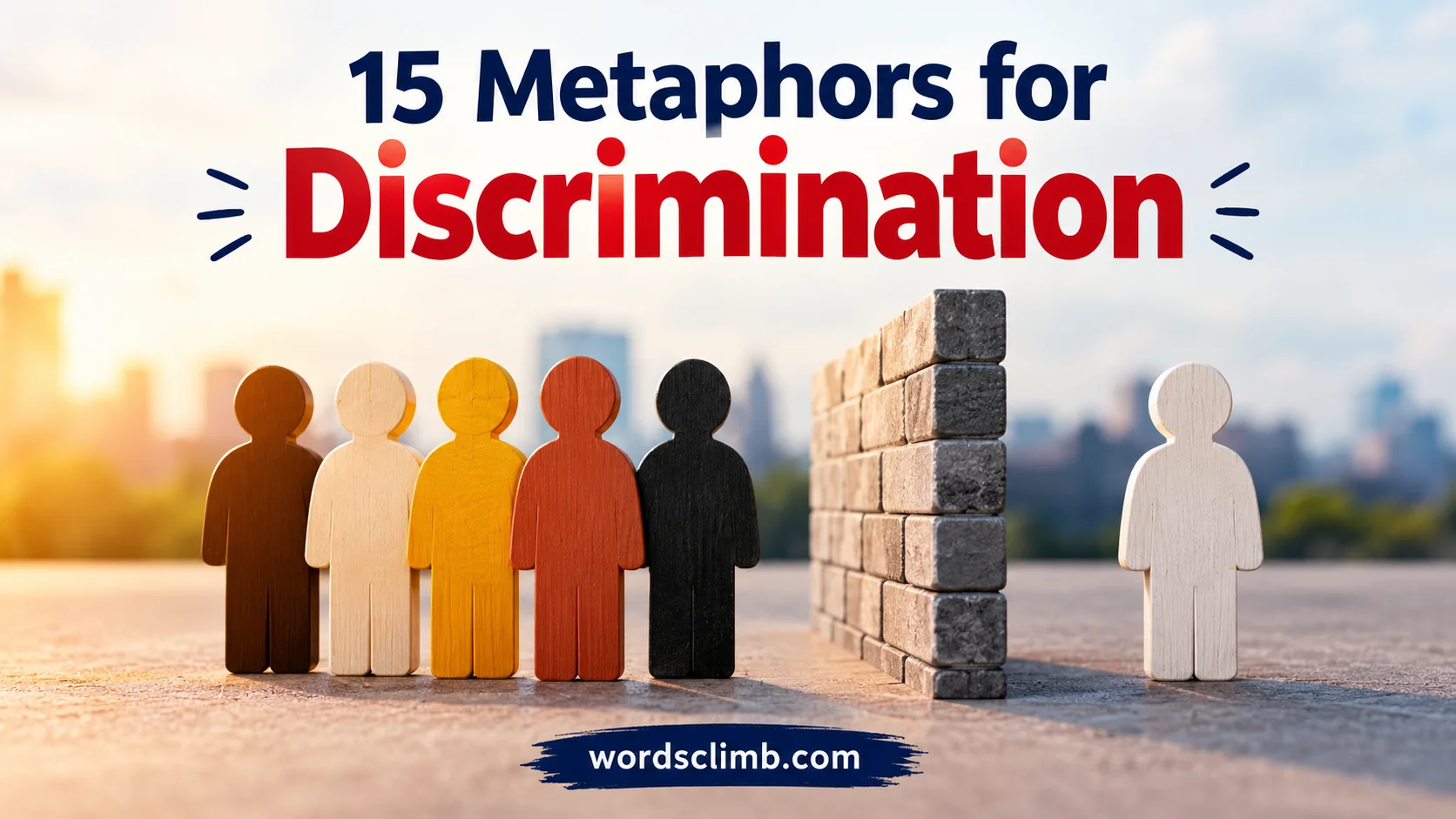
Metaphors for Discrimination make unfair treatment easier to understand by turning complex ideas into clear, vivid comparisons. They help explain prejudice, exclusion, injustice, barriers, and inequality in a simple yet meaningful way. Whether you are writing an essay, speech, poem, or article, these expressions can make your message more powerful and emotionally engaging.
Discrimination can feel like a closed door, an invisible wall, or a shadow that follows someone through life. A cage can represent restricted freedom, while a stain can show the lasting effects of prejudice. These powerful images help readers understand the emotional and societal impact of unfair treatment. Using the right metaphor can turn an abstract social issue into something people can easily see, feel, and understand.
1. Discrimination Is a Wall
Meaning:
This metaphor means that discrimination creates a barrier between people, preventing some individuals from receiving the same opportunities, respect, or acceptance as others.
Detailed Explanation:
A wall separates one space from another, and discrimination can work in a similar way. It may prevent people from participating fully in education, employment, social life, or other opportunities. The wall may not always be visible, but its effects can be very real. This metaphor emphasizes separation and exclusion.
Example Sentence:
- Discrimination is a wall that keeps qualified people from reaching the opportunities they deserve.
3 Other Ways to Say It:
- Discrimination is a barrier to equality.
- Prejudice creates an invisible boundary.
- Unfair treatment can separate people from opportunity.
2. Discrimination Is a Shadow
Meaning:
This metaphor describes discrimination as something that follows people and affects their lives, even when it is not immediately visible.
Detailed Explanation:
A shadow moves with a person and can remain present even when the person is trying to move forward. Similarly, discrimination can leave lasting effects on confidence, relationships, opportunities, and belonging. The metaphor emphasizes the persistent nature of discriminatory experiences.
Example Sentence:
- Discrimination is a shadow that can follow people long after an unfair experience has ended.
3 Other Ways to Say It:
- Discrimination is a constant burden.
- Prejudice can leave a lasting presence.
- Unfair treatment can linger in people’s lives.
3. Discrimination Is a Locked Door
Meaning:
This metaphor suggests that discrimination blocks access to opportunities that should be available fairly to everyone.
Detailed Explanation:
A locked door prevents someone from entering a place even when they may have every reason to be there. In the same way, discrimination can deny individuals opportunities because of characteristics unrelated to their abilities or qualifications. The metaphor focuses on denied access and exclusion.
Example Sentence:
- Discrimination is a locked door standing between talented individuals and opportunities.
3 Other Ways to Say It:
- Discrimination closes doors to opportunity.
- Prejudice can become an obstacle to participation.
- Unfair treatment can deny people access.
4. Discrimination Is a Deep Wound
Meaning:
This metaphor compares discrimination to a wound because it can cause emotional and social pain.
Detailed Explanation:
A physical wound may take time to heal, and discriminatory treatment can similarly leave emotional effects that do not disappear immediately. Repeated experiences of rejection, humiliation, or unequal treatment may affect a person’s sense of belonging and self-worth. The metaphor highlights the human cost of discrimination.
Example Sentence:
- Discrimination is a deep wound that may take years of understanding and support to heal.
3 Other Ways to Say It:
- Discrimination leaves an emotional scar.
- Prejudice can cause lasting pain.
- Unfair treatment can leave a deep mark.
5. Discrimination Is a Cage
Meaning:
This metaphor presents discrimination as something that restricts people’s freedom and choices.
Detailed Explanation:
A cage limits where someone can move and what they can do. Likewise, discrimination can restrict a person’s access to education, employment, social participation, recognition, or advancement. The metaphor draws attention to how unfair systems can limit a person’s ability to pursue their goals freely.
Example Sentence:
- Discrimination is a cage that can limit a person’s ability to pursue their ambitions.
3 Other Ways to Say It:
- Discrimination is a constraint on freedom.
- Prejudice can limit human potential.
- Inequality can create invisible restrictions.
6. Discrimination Is a Poison
Meaning:
This metaphor suggests that discrimination can spread harm through individuals, institutions, and communities.
Detailed Explanation:
Poison can damage something gradually, sometimes without immediately being noticed. Discrimination can also become deeply rooted in attitudes and systems, affecting relationships and opportunities over time. This metaphor emphasizes the damaging and spreading effects of prejudice.
Example Sentence:
- Discrimination is a poison that can weaken trust within an entire community.
3 Other Ways to Say It:
- Prejudice is a harmful force.
- Discrimination can corrode social trust.
- Bias can spread through communities.
7. Discrimination Is a Broken Bridge
Meaning:
This metaphor suggests that discrimination prevents people from connecting with one another.
Detailed Explanation:
A bridge connects two places, allowing people to travel between them. When a bridge is broken, that connection becomes difficult or impossible. Discrimination can similarly damage relationships between individuals and groups by creating mistrust, exclusion, and division.
Example Sentence:
- Discrimination is a broken bridge that prevents communities from understanding one another.
3 Other Ways to Say It:
- Prejudice damages human connection.
- Discrimination creates a divide between people.
- Bias can weaken relationships between communities.
8. Discrimination Is a Stain
Meaning:
This metaphor describes discrimination as a harmful mark left on an individual’s experience or society.
Detailed Explanation:
A stain can remain visible even after someone tries to clean it away. Similarly, discriminatory practices and attitudes can leave lasting effects on institutions, communities, and people’s experiences. The metaphor focuses on the idea of a persistent negative mark.
Example Sentence:
- Discrimination is a stain that can remain on a community’s history for generations.
3 Other Ways to Say It:
- Discrimination leaves a lasting mark.
- Prejudice can become a dark spot in society.
- Inequality can leave painful traces behind.
9. Discrimination Is a Blindfold
Meaning:
This metaphor suggests that discrimination can prevent people from seeing others fairly and recognizing their abilities or individuality.
Detailed Explanation:
A blindfold prevents someone from seeing what is directly in front of them. Bias can work similarly by causing people to judge others through assumptions rather than considering their character, abilities, or individual circumstances. The metaphor emphasizes limited perception and unfair judgment.
Example Sentence:
- Discrimination is a blindfold that prevents people from seeing the abilities of others clearly.
3 Other Ways to Say It:
- Bias distorts people’s judgment.
- Prejudice can hide a person’s true potential.
- Discrimination prevents fair recognition.
10. Discrimination Is a Heavy Chain
Meaning:
This metaphor portrays discrimination as a force that holds people back from progress and equal participation.
Detailed Explanation:
A heavy chain restricts movement and makes progress difficult. Discrimination can have a similar effect when unfair attitudes or practices prevent people from accessing opportunities or being treated equally. The metaphor emphasizes restriction and unequal obstacles.
Example Sentence:
- Discrimination is a heavy chain that can hold talented people back from achieving their goals.
3 Other Ways to Say It:
- Discrimination can hold people back.
- Prejudice creates unfair restraints.
- Inequality can become a weight on progress.
Read More: 15 Metaphors for Dying (With Examples)
11. Discrimination Is a Cracked Mirror
Meaning:
This metaphor suggests that discrimination can distort how people are perceived and how they may eventually perceive themselves.
Detailed Explanation:
A cracked mirror does not provide a clear reflection. Likewise, prejudice can distort the way society sees individuals, reducing them to stereotypes rather than recognizing their complete identity. Repeated unfair treatment may also influence how individuals understand their place in society.
Example Sentence:
- Discrimination is a cracked mirror that reflects stereotypes instead of people’s full identities.
3 Other Ways to Say It:
- Prejudice distorts perception.
- Bias creates a false reflection of identity.
- Discrimination can twist how people are seen.
12. Discrimination Is an Uneven Road
Meaning:
This metaphor means that discrimination can make the journey toward success and opportunity harder for some people than for others.
Detailed Explanation:
An uneven road makes travel more difficult and requires extra effort to move forward. Similarly, discriminatory treatment can create additional obstacles for people trying to achieve goals in school, work, public life, or other areas. The metaphor emphasizes unequal conditions.
Example Sentence:
- Discrimination is an uneven road where some people must overcome obstacles that others never face.
3 Other Ways to Say It:
- Discrimination creates an unequal path.
- Prejudice can make progress more difficult for some.
- Inequality places extra obstacles in people’s way.
13. Discrimination Is a Storm Cloud
Meaning:
This metaphor presents discrimination as a dark and troubling presence that can affect the atmosphere of a community.
Detailed Explanation:
A storm cloud can cover the sky and create a sense of uncertainty or unease. Discrimination can similarly affect communities by creating fear, tension, mistrust, and insecurity. The metaphor is useful when discussing the broader social atmosphere created by unfair treatment.
Example Sentence:
- Discrimination is a storm cloud that can darken the sense of belonging within a community.
3 Other Ways to Say It:
- Prejudice creates a cloud of fear.
- Discrimination can darken social relationships.
- Bias can create an atmosphere of uncertainty.
14. Discrimination Is a Wall of Silence
Meaning:
This metaphor describes discrimination as something that can prevent people from speaking openly about unfair treatment or being heard when they do.
Detailed Explanation:
Silence can make problems harder to recognize and address. When people fear rejection, retaliation, embarrassment, or disbelief, they may hesitate to speak about discriminatory experiences. This metaphor highlights the importance of listening, acknowledgment, and open communication.
Example Sentence:
- Discrimination is a wall of silence when people feel unable to speak about the unfair treatment they experience.
3 Other Ways to Say It:
- Discrimination can silence people’s voices.
- Prejudice creates a barrier to honest conversation.
- Unfair treatment can make people afraid to speak up.
15. Discrimination Is a Thorn in Society
Meaning:
This metaphor describes discrimination as a painful problem that remains embedded within society and causes repeated harm.
Detailed Explanation:
A thorn is small but painful, especially when it remains embedded and continues to irritate. Similarly, discrimination may appear in individual interactions, institutions, or social practices and continue causing harm if it is not addressed. The metaphor emphasizes that even something normalized or overlooked can have serious consequences.
Example Sentence:
- Discrimination is a thorn in society that continues to cause pain whenever inequality is tolerated.
3 Other Ways to Say It:
- Discrimination is a persistent social problem.
- Prejudice is a painful obstacle to equality.
- Bias remains a harmful issue that needs attention.
MCQs
1. “Discrimination is a ______ because it can prevent qualified people from accessing opportunities.”
A. storm cloud
B. locked door
C. cracked mirror
D. shadow
2. “Discrimination is a ______ that can follow people long after an unfair experience.”
A. shadow
B. bridge
C. road
D. mirror
3. Which metaphor emphasizes emotional pain?
A. A locked door
B. An uneven road
C. A deep wound
D. A blindfold
4. “Discrimination is a ______ that restricts people’s freedom and choices.”
A. cage
B. bridge
C. mirror
D. storm cloud
5. Which metaphor focuses on distorted perception?
A. Heavy chain
B. Cracked mirror
C. Broken bridge
D. Thorn
6. “Discrimination is a ______ that prevents communities from connecting.”
A. broken bridge
B. deep wound
C. stain
D. blindfold
7. Which metaphor represents unequal conditions?
A. Uneven road
B. Poison
C. Shadow
D. Locked door
8. “Discrimination is a ______ that can weaken trust within a community.”
A. cage
B. poison
C. mirror
D. chain
9. Which metaphor describes discrimination as a restriction on progress?
A. Heavy chain
B. Storm cloud
C. Stain
D. Blindfold
10. Which metaphor represents the inability or reluctance to speak about unfair treatment?
A. Wall of silence
B. Uneven road
C. Broken bridge
D. Deep wound
11. “Discrimination is a ______ that can leave a lasting mark on society.”
A. stain
B. door
C. road
D. blindfold
12. Which metaphor describes discrimination as something that darkens the social atmosphere?
A. Storm cloud
B. Locked door
C. Heavy chain
D. Cracked mirror
13. “Discrimination is a ______ that prevents people from seeing others without unfair assumptions.”
A. thorn
B. blindfold
C. wall
D. cage
14. Which metaphor describes discrimination as a persistent painful problem?
A. Thorn in society
B. Broken bridge
C. Shadow
D. Locked door
15. Which metaphor most directly represents separation between people?
A. Wall
B. Poison
C. Wound
D. Blindfold
Answers
- B — Locked door
- A — Shadow
- C — Deep wound
- A — Cage
- B — Cracked mirror
- A — Broken bridge
- A — Uneven road
- B — Poison
- A — Heavy chain
- A — Wall of silence
- A — Stain
- A — Storm cloud
- B — Blindfold
- A — Thorn in society
- A — Wall
FAQs:
1. What is a metaphor for discrimination?
A metaphor for discrimination compares unfair treatment to something familiar, such as a wall, cage, closed door, or shadow, to make the idea easier to understand.
2. Why are metaphors useful for describing discrimination?
Metaphors make complex social issues more vivid and emotional. They help readers understand the effects of prejudice, exclusion, inequality, and injustice through familiar images.
3. What is a good metaphor for discrimination?
A wall is a powerful metaphor for discrimination because it represents barriers and exclusion that prevent people from receiving equal opportunities or feeling accepted.
4. Can metaphors for discrimination be used in essays?
Yes. Metaphors can make essays, speeches, poems, and other forms of writing more engaging and meaningful while helping explain difficult ideas clearly.
5. What can a cage symbolize in discrimination?
A cage can symbolize restricted freedom, limited choices, and unfair barriers placed on people because of characteristics such as race, gender, religion, or background.
Conclusion:
Metaphors for Discrimination give writers a powerful way to describe prejudice, inequality, exclusion, and unfair treatment. Images such as walls, cages, closed doors, and shadows can make difficult social issues easier to see and understand. By choosing thoughtful and meaningful metaphors, you can communicate the emotional impact of discrimination while encouraging readers to think about fairness, equality, kindness, and respect.

Adam West is an English-language writer with a passion for storytelling, culture, and everyday life. His writing focuses on clear ideas, engaging narratives, and thoughtful perspectives that are easy for readers to connect with.












1 thought on “15 Metaphors for Discrimination (With Examples) ”